The idea in one picture.
10DLC stands for 10-Digit Long Code — the ordinary 10-digit phone numbers businesses text from. The “system” part: US carriers now require businesses to register those numbers, declaring who they are and what they’ll send, before their application-to-person (A2P) texts get approved throughput. Registered long code + verified brand = 10DLC.
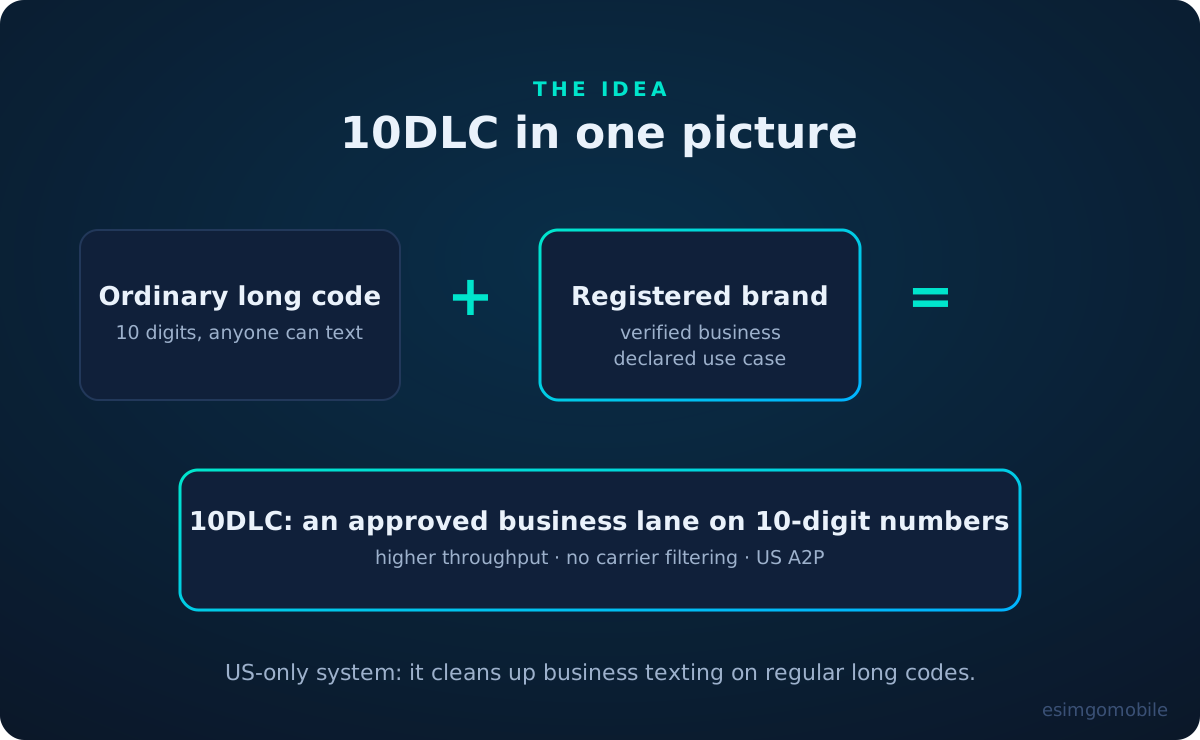
Two things to lock in early: 10DLC is US-only — it’s an agreement between US carriers, not a global standard — and it applies to A2P traffic (business systems texting people), not to you texting your friends.
Why it exists: the spam problem.
For years, US business texting lived in a gray zone. Long codes were designed for person-to-person conversation, but businesses discovered they could blast campaigns from them — cheaply, and invisibly. Carriers responded the only way they could: aggressive filtering. Legitimate appointment reminders got eaten alongside actual spam, because from the network’s perspective they looked identical.
10DLC is the truce. Businesses register and declare their traffic; carriers, in return, stop treating it as suspicious — granting approved throughput, better deliverability, and lower per-message surcharges than unregistered traffic. It turned “spray and pray” from the default into the penalized exception.
The registration stack: brand → campaign → carriers.
Registration has layers, each answering a different question:
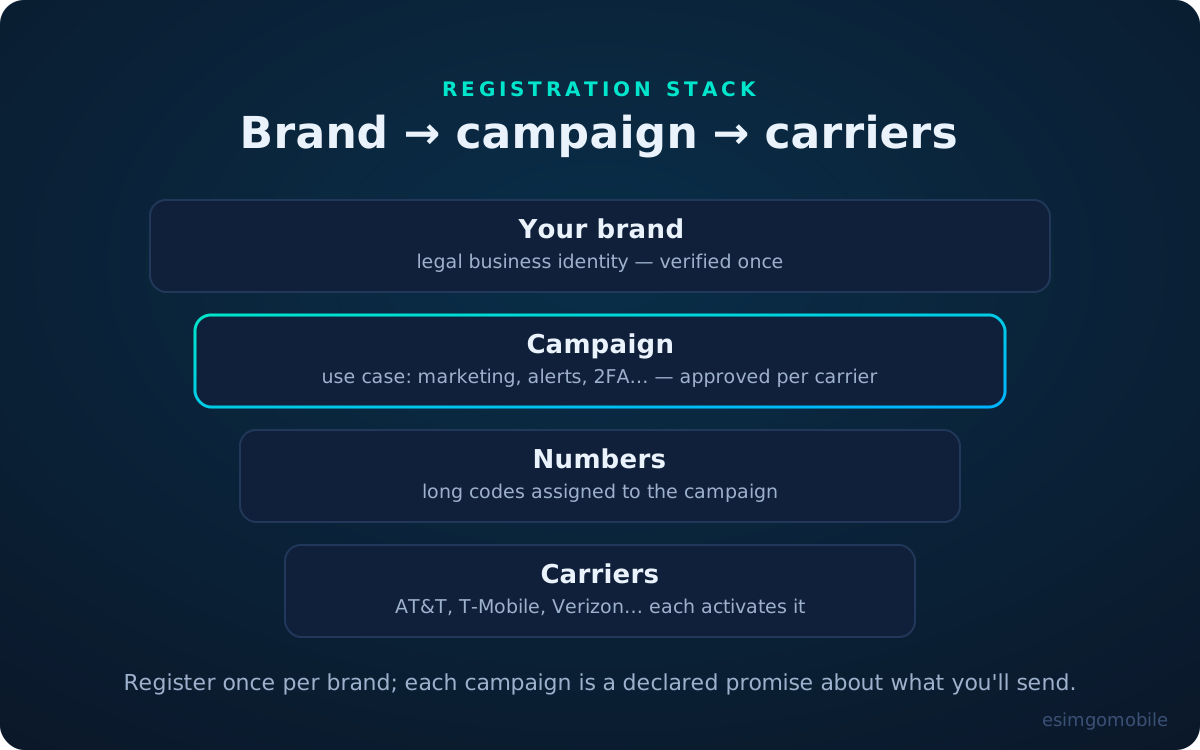
- Brand — your legal business identity: name, tax ID/EIN, address, contact. Verified once through The Campaign Registry (TCR), the industry body carriers designated for this job. Brand types range from sole proprietor (individuals, lowest volume) through low-volume standard to standard (registered businesses, full volume).
- Campaign — your use case: marketing, customer care, alerts, 2FA, and so on. Each campaign declares what you’ll send, includes sample messages, and describes how you collect opt-ins. Carriers review and approve each campaign — this is the layer where honesty matters, because the declaration is what your traffic is judged against.
- Numbers — your long codes, assigned to the approved campaign. A number can only live on one campaign at a time.
Who’s involved.
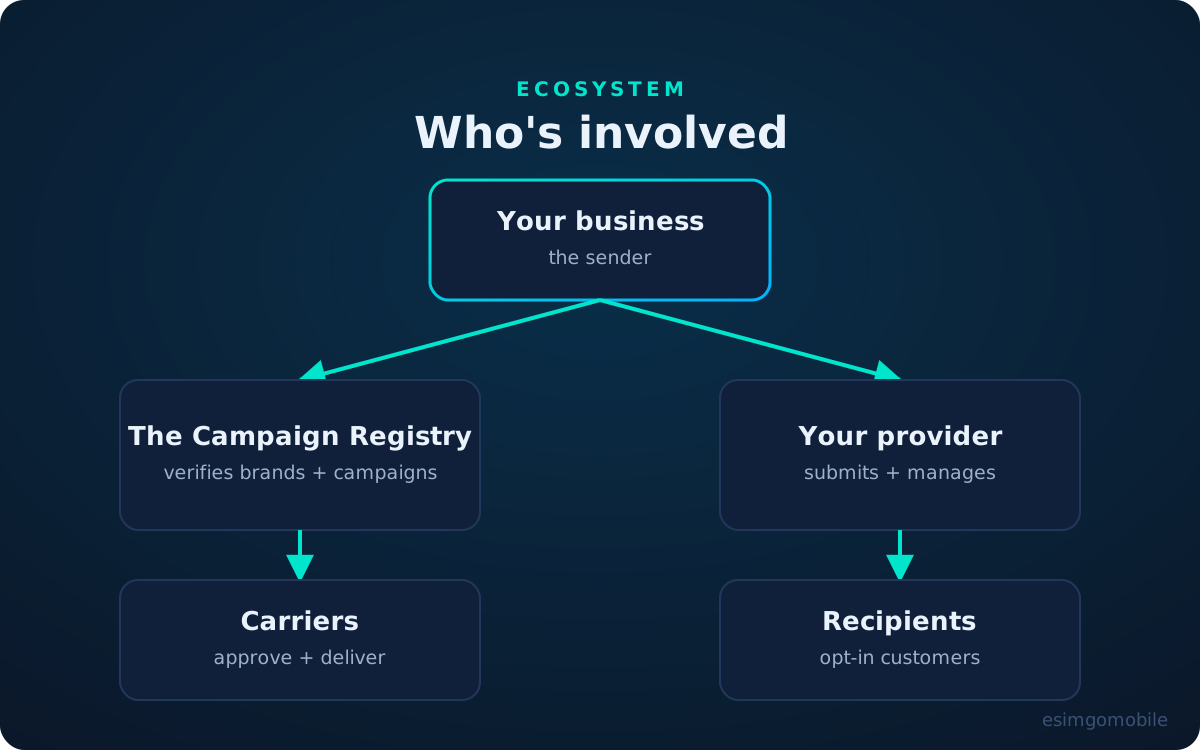
In practice, you mostly deal with your provider (like esimgomobile): they submit the brand, build the campaign, attach the numbers, and shepherd the carrier approvals. Your job is supplying accurate business details and truthful use-case descriptions — the two things only you can provide.
Throughput tiers: registration unlocks speed.
The single most tangible benefit of 10DLC is throughput. Unregistered long-code A2P traffic is throttled hard and filtered often. Registration moves you into tiered daily throughput, per brand, per carrier — with higher tiers for vetted, high-trust senders.
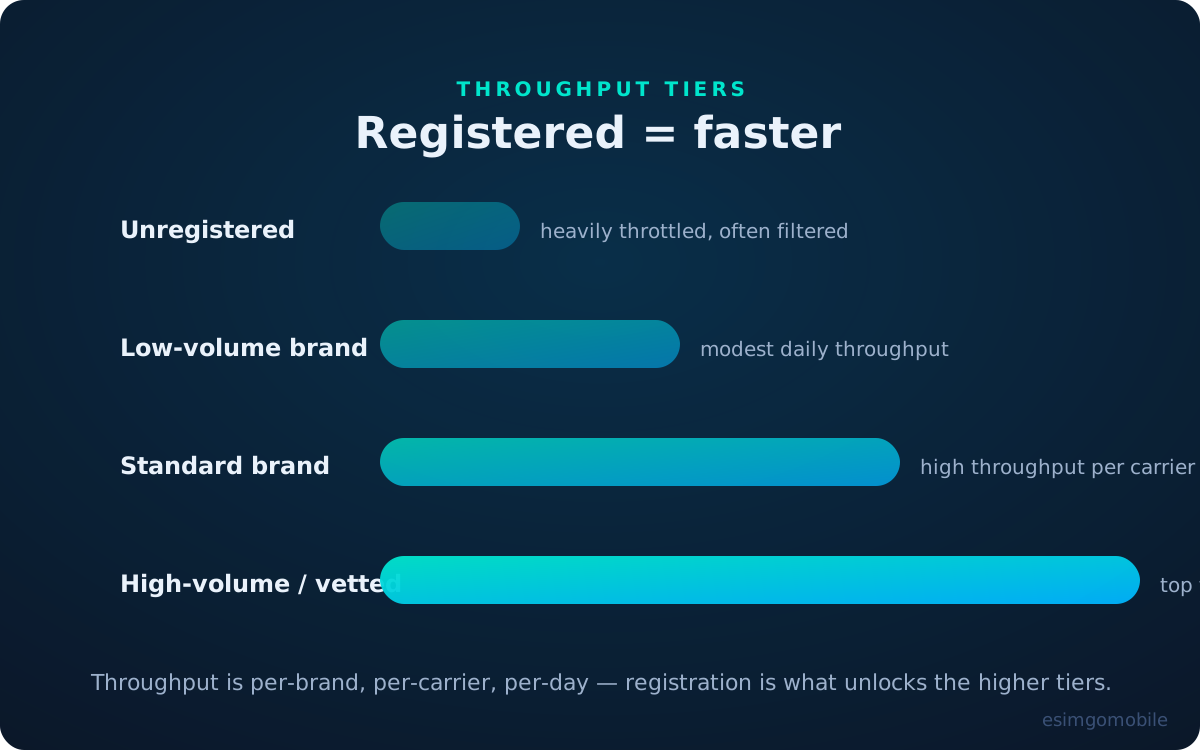
Throughput is measured per day, per carrier, per brand — and it’s use-case sensitive. A 2FA campaign and a marketing campaign from the same brand get different treatment, because carriers score trust partly by what you send, not just who you are.
Registered vs. unregistered.
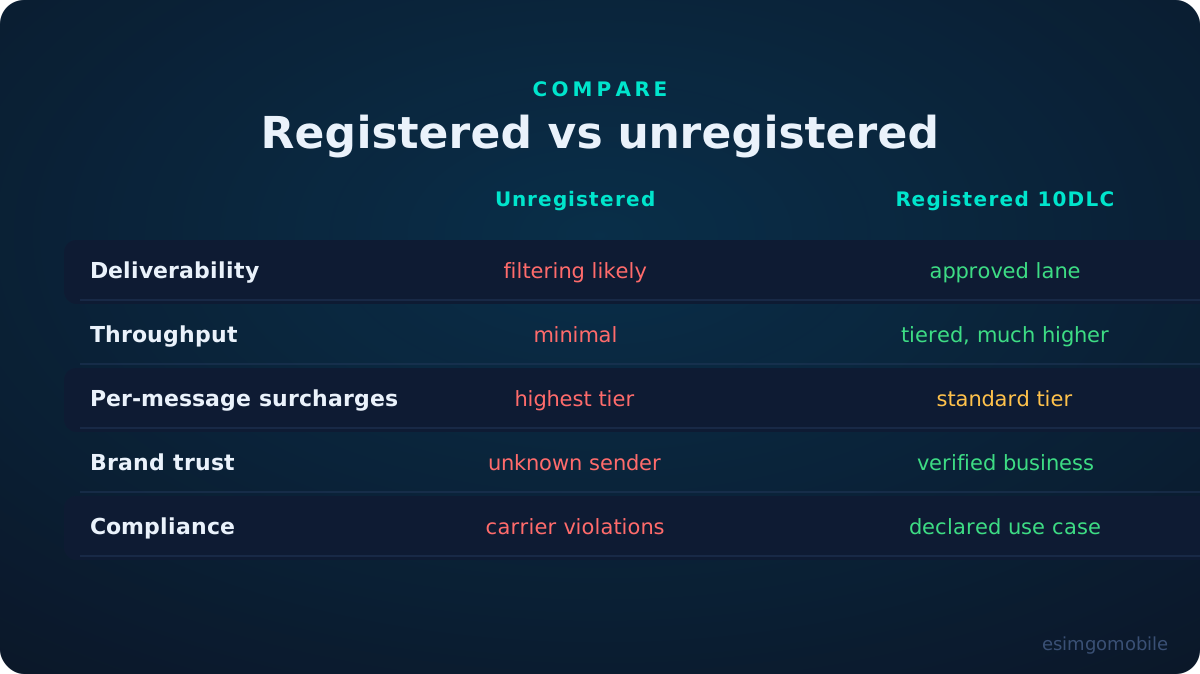
The industry direction is unambiguous: unregistered A2P is being squeezed everywhere — higher surcharges, lower throughput, more filtering. Registration isn’t just best practice anymore; it’s the only sustainable way to text customers in the US.
What it costs, in plain terms.
10DLC has three cost layers, all modest for a real business and all worth knowing about upfront:
- Registration fees: a one-time brand registration fee, plus a small monthly fee per campaign (on the order of a few dollars). Vetting for higher throughput tiers costs extra, one-time.
- Carrier surcharges: per-segment fees added by each carrier — fractions of a cent, but they apply to every message and vary by carrier, so they dominate at scale.
- Your provider’s messaging rates: the per-message price from your platform, on top of the carrier surcharges.
Budget all three when modeling campaign costs. And note the asymmetry: unregistered traffic often carries higher per-message surcharges — the carriers price the unregistered lane to discourage it.
The registration checklist.
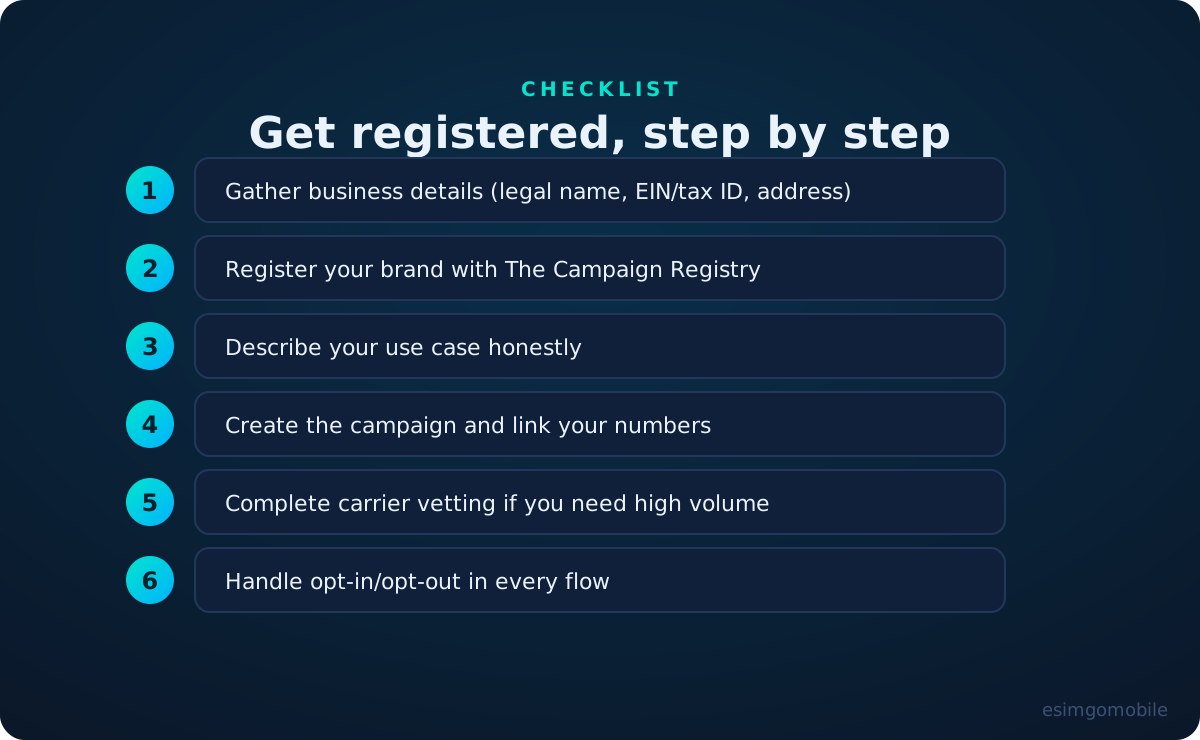
The step that trips people up is the use-case description. Write it like a carrier reviewer will read it — because one will. Describe exactly what you send, show real sample messages, document your opt-in flow with screenshots or URLs, and keep your opt-out handling airtight. Vague applications get rejected; precise ones sail through.
esimgomobile handles the paperwork: at launch, our platform will walk you through brand registration, campaign setup and carrier vetting as part of enabling business SMS — you supply the business details, we handle the registry. Get started.
Questions, answered.
What does 10DLC stand for?
Is 10DLC required?
Does 10DLC apply outside the US?
What is The Campaign Registry?
How long does 10DLC registration take?
Can one brand have multiple campaigns?
Where to go next.
Get your virtual number today.
Virtual numbers are live now — claim yours alongside any eSIM plan.