Why the choice matters more than you think.
A phone number is a strange asset: it costs almost nothing, yet it shapes first impressions, sticks in memory (or doesn’t), signals how big you are, and — once it’s printed on vans, cards and websites — becomes expensive to change. Businesses agonize over logos and treat the number as an afterthought. Flip that.
The right number does quiet work every day: a local number gets answered because it looks like a neighbor; a toll-free number gets dialed because it’s free and feels established; a vanity number gets remembered from a billboard at 60 mph. The wrong number just… sits there, being dialed less.
The five types, in plain language.
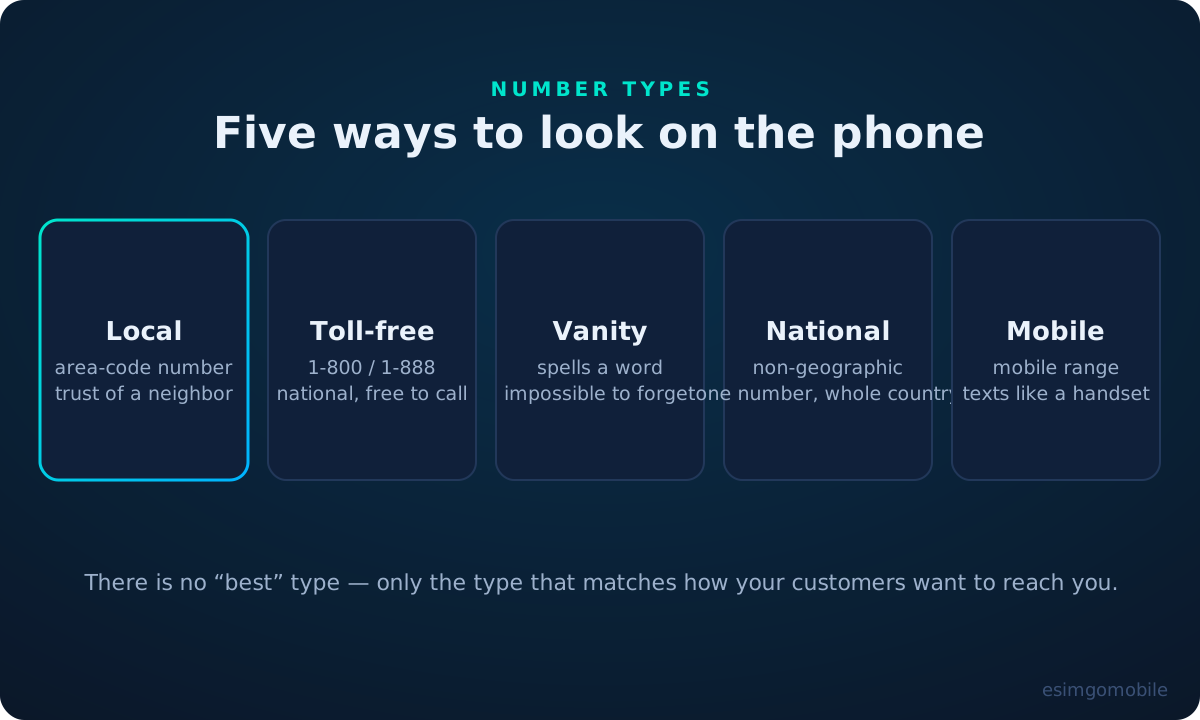
- Local — an area-code number. Says “we’re from here.” Highest answer rates for local outreach.
- Toll-free — free for the caller, you pay the toll. Says “we’re national and established.”
- Vanity — spells a word on the keypad. Says “we’re memorable.” Built for advertising.
- National / non-geographic — one number for the whole country, no city attached. Common in the UK and EU.
- Mobile — a mobile-range number. Says “text me” — best SMS deliverability and conversational feel.
Local vs. toll-free: the classic decision.
Most businesses start here, and the answer is usually geographic: if your customers cluster around you — a plumber, a clinic, a restaurant — go local. Familiarity wins. If your customers are everywhere — SaaS, e-commerce, national services — go toll-free. Removing the cost and the area-code guesswork wins.
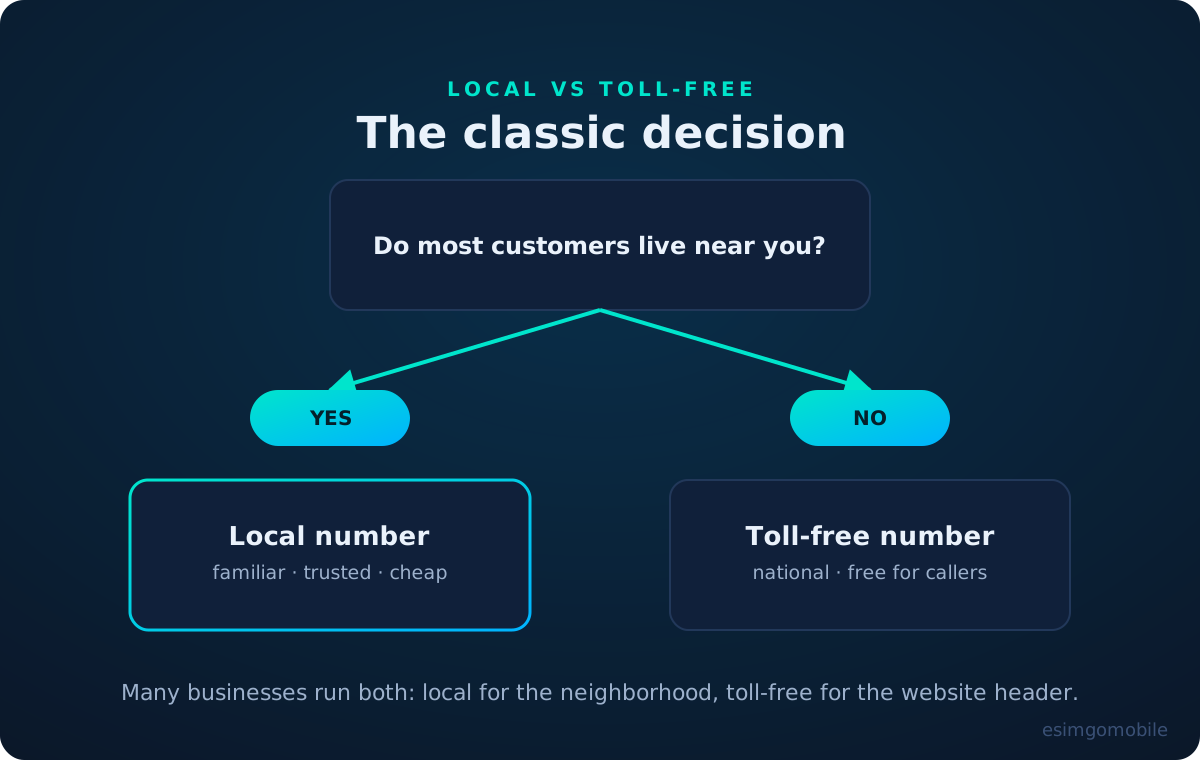
The power move, once you can afford two numbers: run both. Local on the location pages and local ads, toll-free in the website header and national campaigns. One team answers both — the caller just sees the identity that fits their context.
Anatomy of a vanity number.
A vanity number maps letters to keypad digits (2=ABC, 3=DEF, … 9=WXYZ). 1-800-555-PLUM is really 1-800-555-7586 — the phone network only understands digits; the word is pure human interface. Note the 555 exchange: in North America, 555 numbers are reserved as fictional, which is why examples use them.
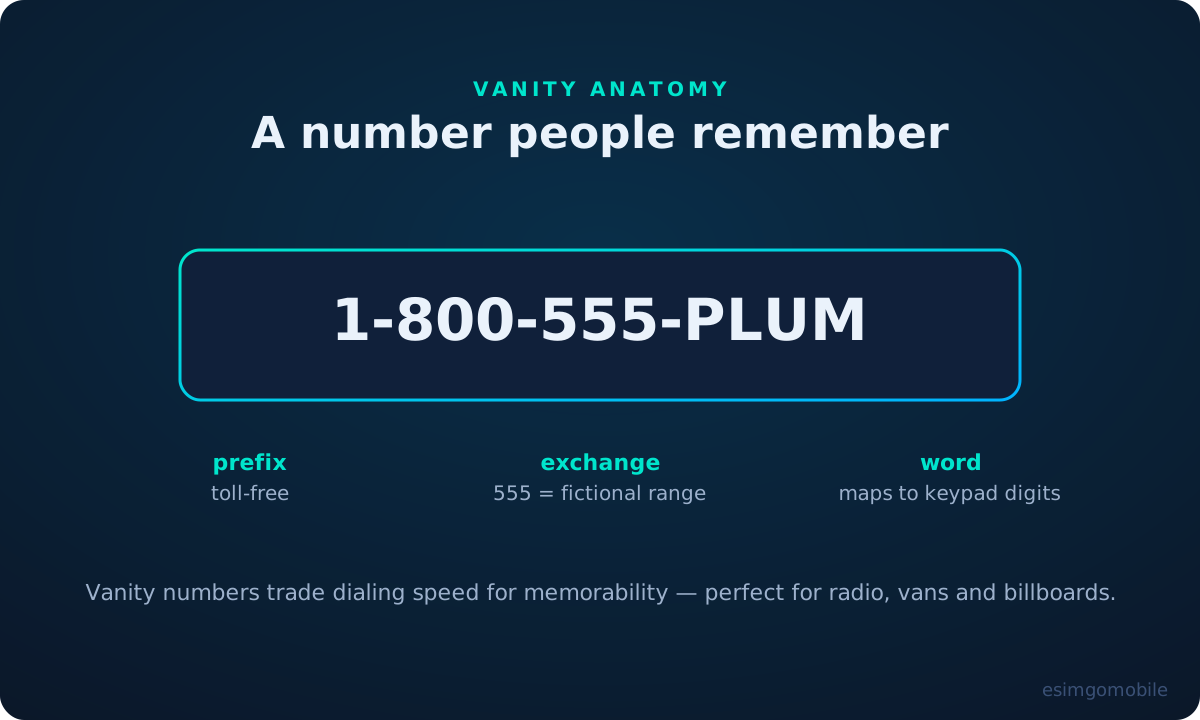
Vanity numbers are a broadcast medium investment. They pay off on radio, billboards, van liveries and TV — anywhere the customer can’t click a link and has three seconds to remember. For a business that lives on Google search, a vanity number is mostly jewelry. For one that lives on the side of trucks, it’s machinery.
Vanity hunting tip: the obvious words are taken. The wins are in creative spellings, local area codes with words, and short memorable digit patterns (repeats, sequences). Check availability before you fall in love — and check you can port it before you commit.
What each type signals.
Customers read numbers like body language — instantly and mostly unconsciously:
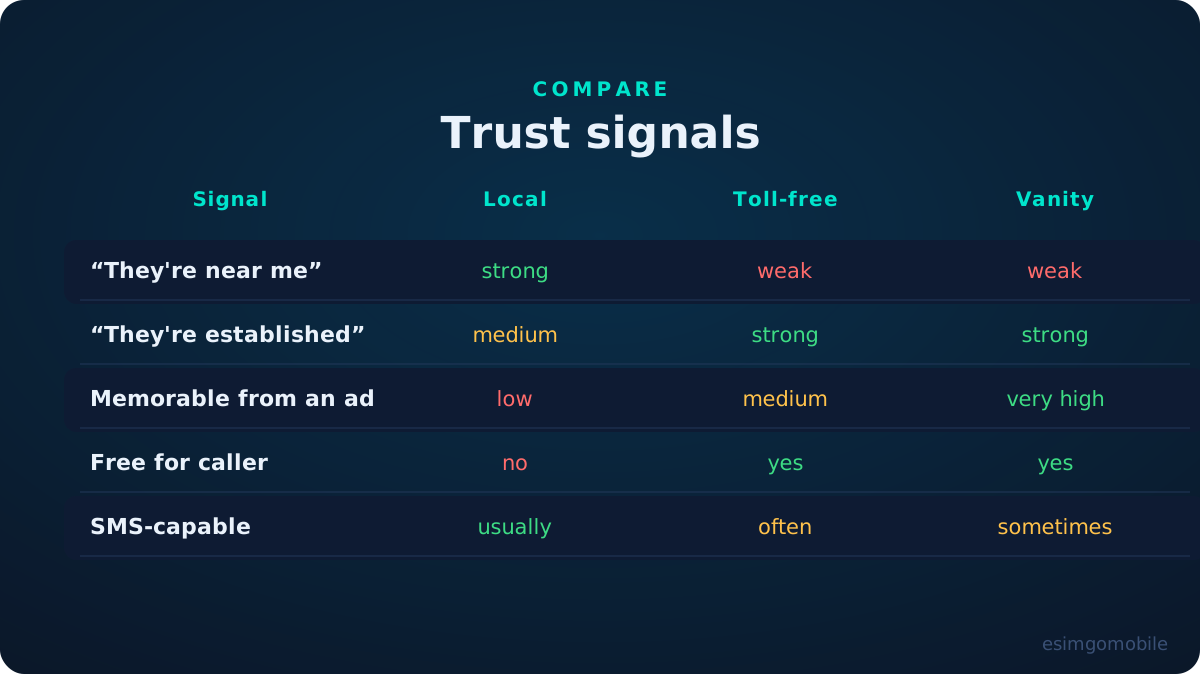
Match the signal to the sale. High-trust local services (contractors, healthcare, legal) usually want local. National credibility plays (insurance, SaaS, franchises) want toll-free. And if your growth is conversational — texting customers, appointment reminders — a mobile number is quietly the best choice nobody talks about.
Portability: make sure it’s really yours.
Before you print a number on anything, confirm two things: that you can port it in (if it’s an existing number) and that you can port it out later. In most countries, regulation protects your right to take your number between providers — but some number types and some providers make it harder than others.
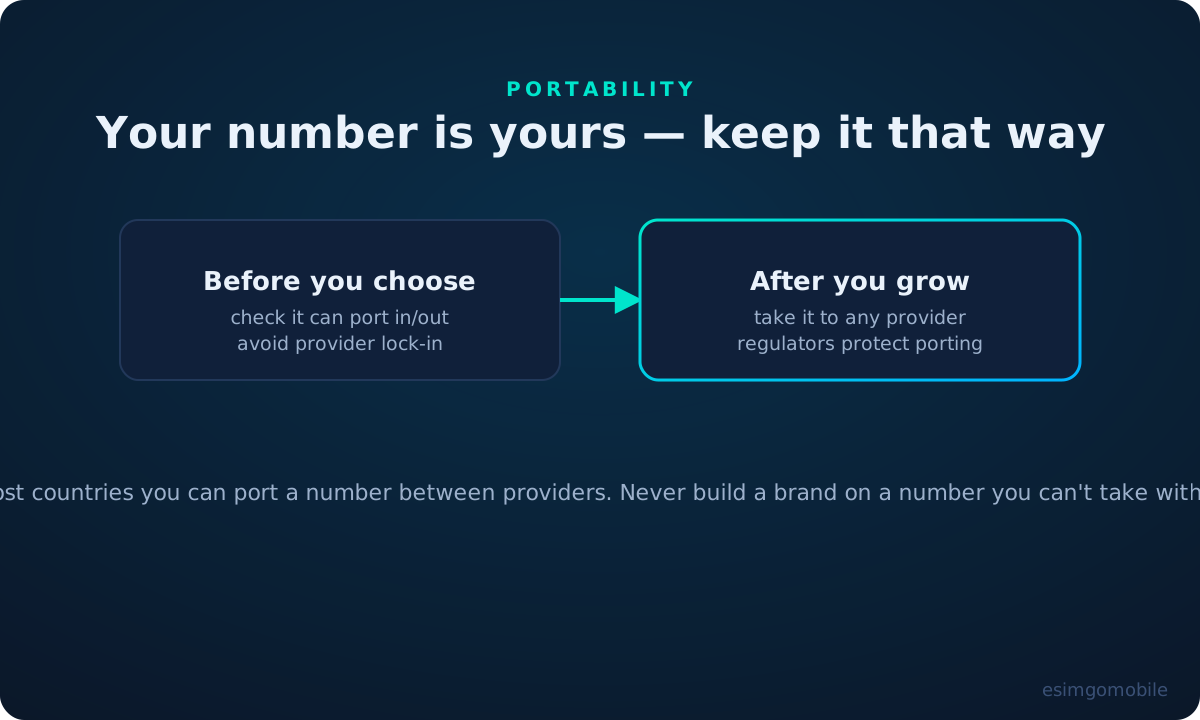
The nightmare scenario is real: a business builds five years of reputation on a number, the provider raises prices or degrades service, and the number turns out to be non-portable. Ask the portability question before you commit, in writing, and you’ll never live the nightmare.
The six-step checklist.
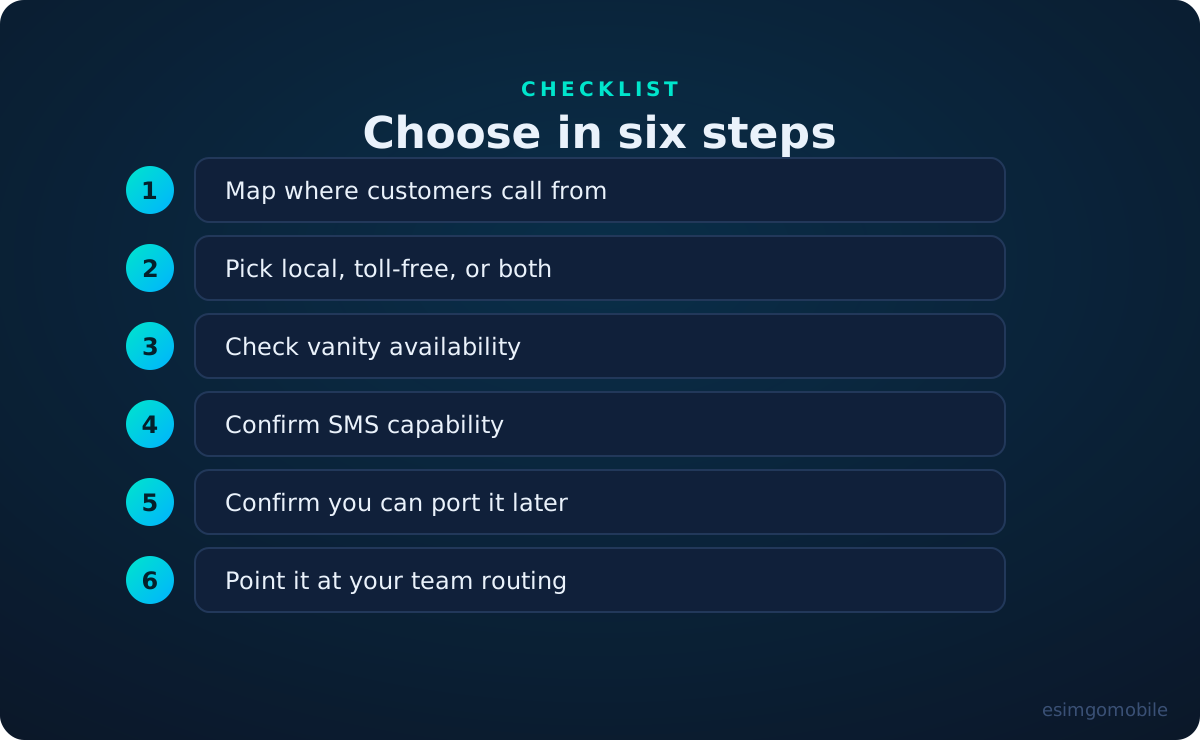
Then point it at your team routing, set your business hours, record a greeting you’d be proud of — and test it like a customer would. The number is chosen; now make it work as hard as you do.
At launch, esimgomobile will offer local, toll-free and mobile virtual numbers with porting in both directions — claim yours from the pricing, and browse virtual numbers to see what’s coming.
Questions, answered.
Should my business get a local or toll-free number?
Are vanity numbers worth it?
Can I get a number in a city I’m not in?
Will a virtual number hurt my business credibility?
Can I change my number type later?
Where to go next.
Get your virtual number today.
Virtual numbers are live now — claim yours alongside any eSIM plan.