🧭
The Digital Nomad's eSIM Handbook
The individual traveler's version of this stack.
Read nextHome›Blog›Advanced eSIM guides
Advanced eSIM guidesBusiness travel connectivity is either a controlled line item or an expense-report swamp — nothing in between. eSIM gives companies a third option neither roaming nor local SIMs could: centrally managed, policy-enforced connectivity deployed before the employee lands. This guide covers the two operating models, how MDM provisioning actually works, the security requirements worth writing into policy, and the cost controls that keep finance happy.
Business travel connectivity fails companies in three predictable ways:
eSIM addresses all three structurally: plans bought in advance at known prices, provisioned to managed devices under policy, active before touchdown. The question isn't whether eSIM beats roaming for business — it's which operating model fits your company.
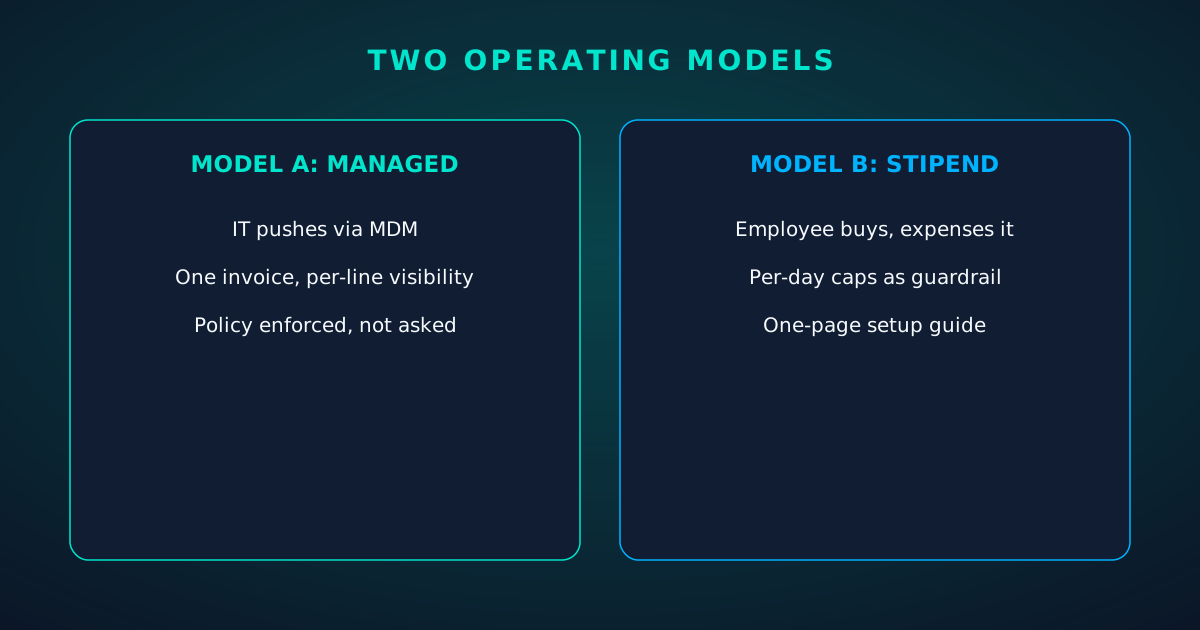
IT owns the connectivity. The company contracts an eSIM provider (or a travel-connectivity platform), and profiles are pushed to employees' devices via MDM before or during travel.
The trade-off is operational: someone has to run it. For fleets of frequent travelers, that someone pays for themselves in reclaimed roaming spend.
Employees buy their own travel eSIMs and expense them within policy limits. The company sets the guardrails; the traveler handles the logistics.
The trade-off is visibility: you see receipts, not usage. For most companies under a few hundred travelers, that's an acceptable trade.
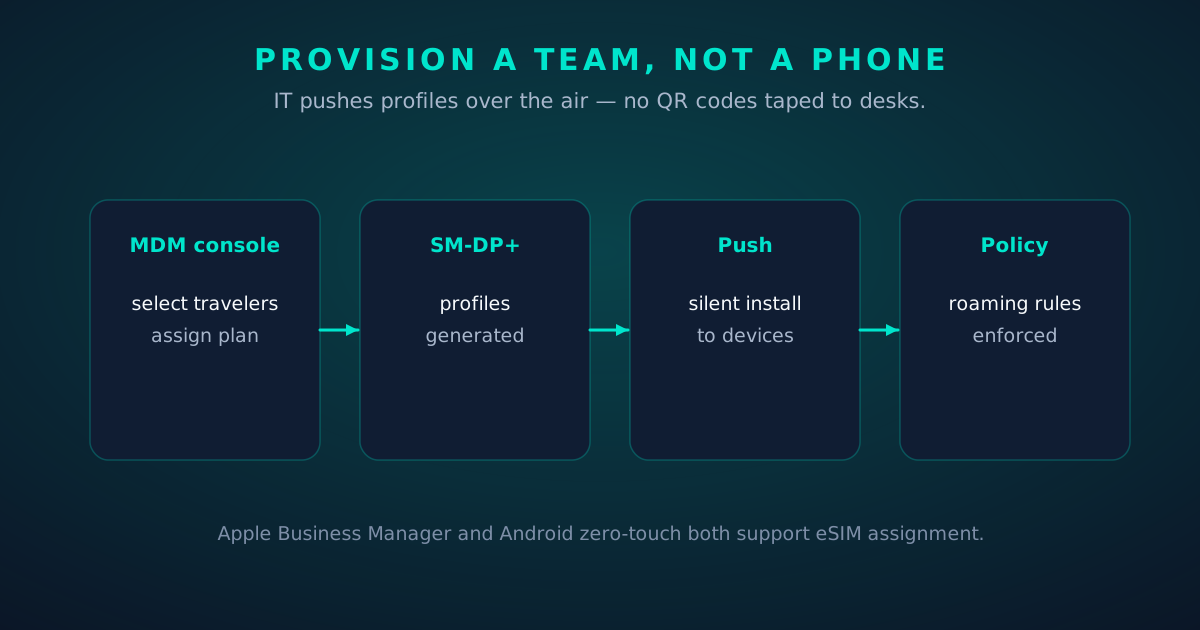
For the managed model, here's what actually happens technically:
None of this requires exotic tooling — it's the same MDM most companies already use for Wi-Fi certificates and VPN profiles, pointed at eSIM payloads.
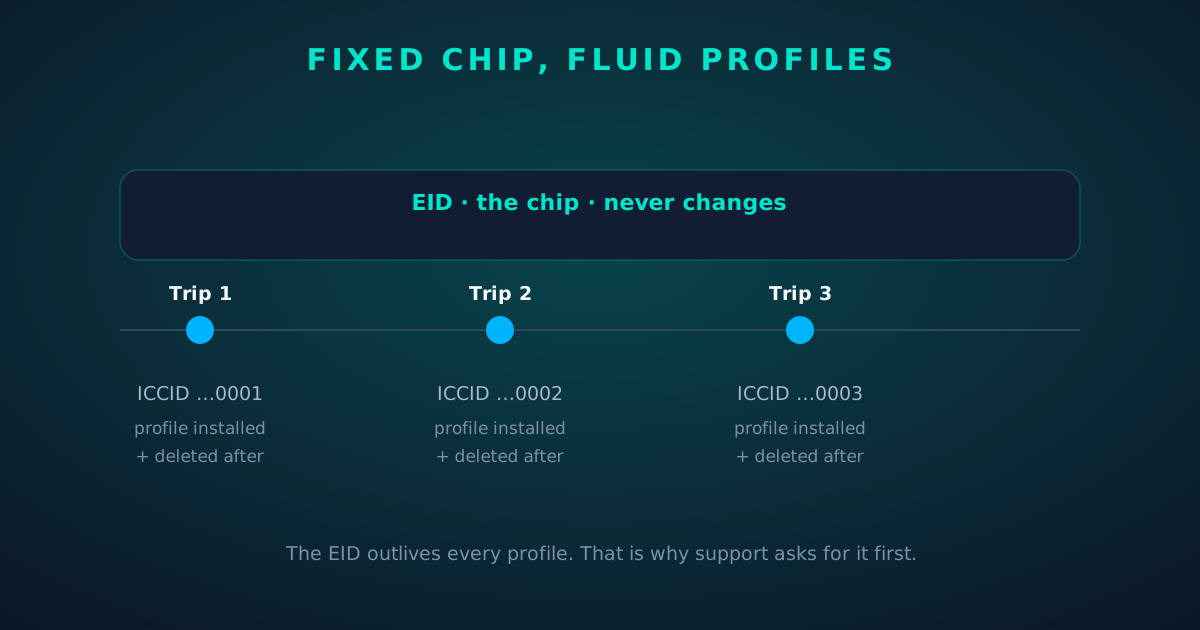
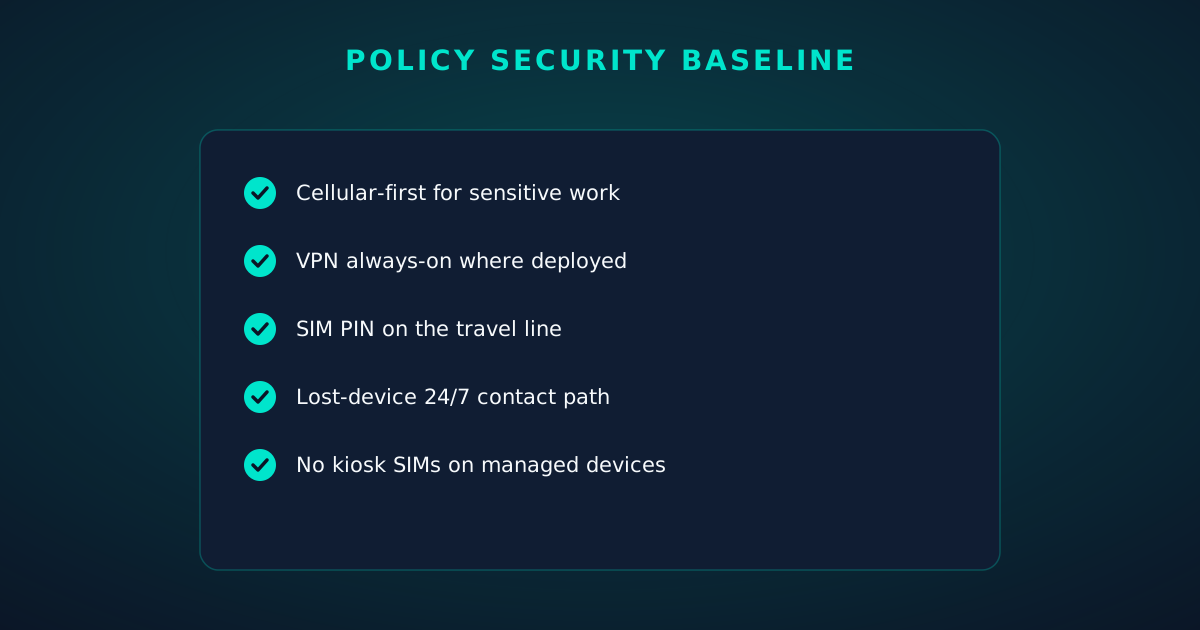
Write these into the travel connectivity policy, not just the security wiki:
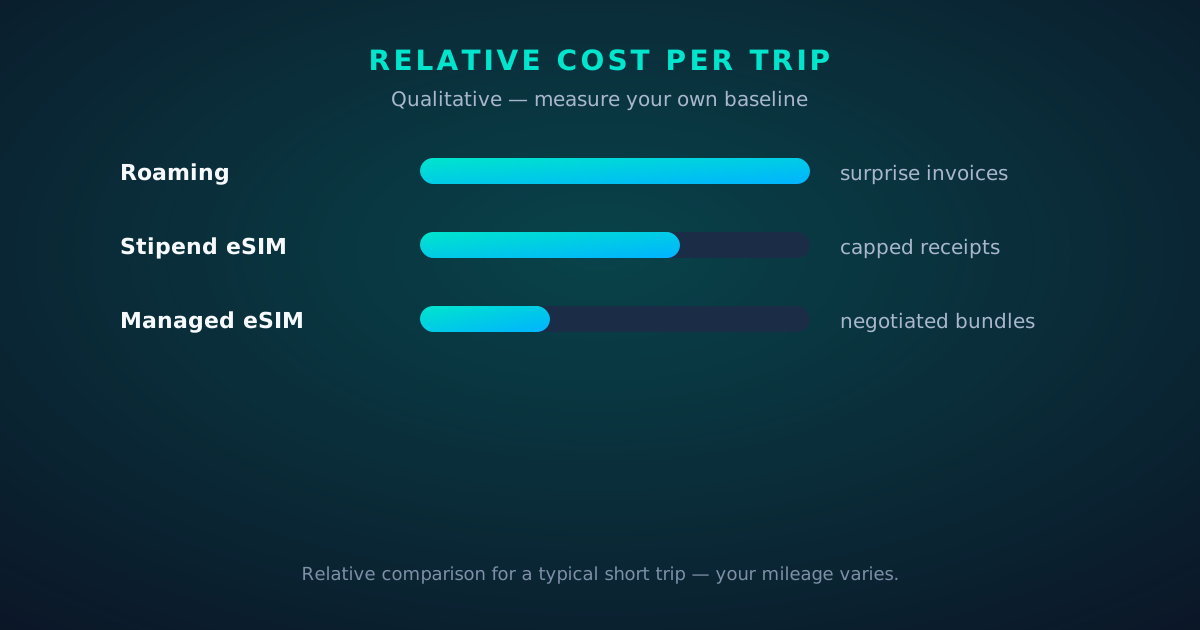
The business case writes itself if you frame it against roaming:
Business travelers must be reachable — by clients, by the office, by their teams. The dual-line setup delivers this:
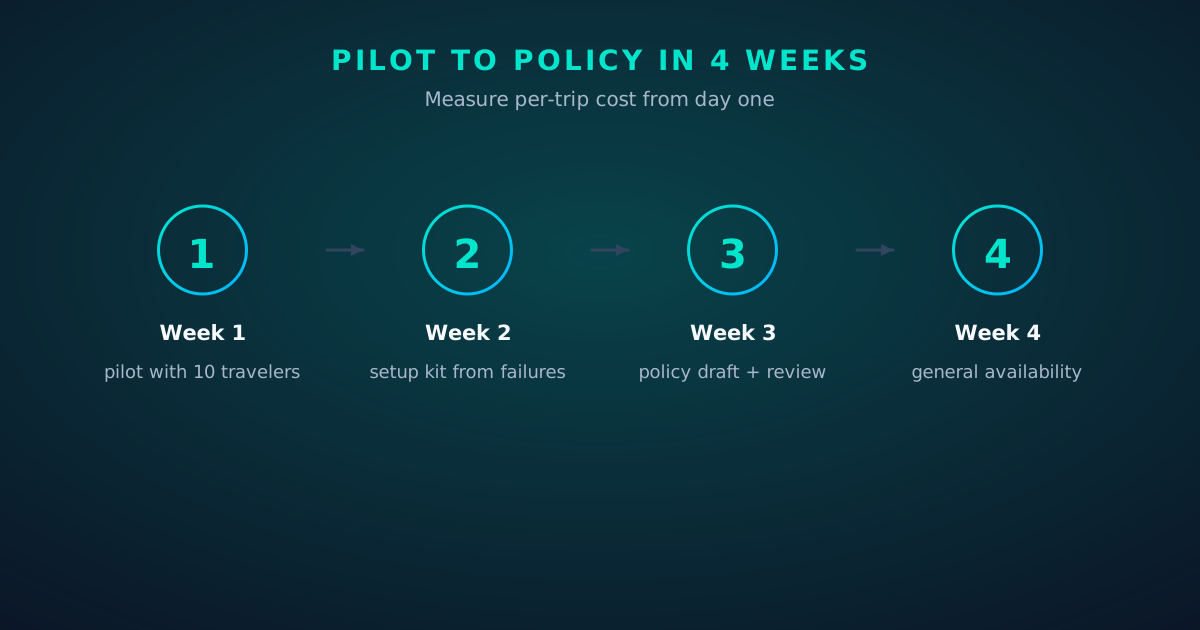
Don't boil the ocean. A four-week rollout:
Measure from day one: per-trip cost, helpdesk tickets per trip, and traveler satisfaction. The first quarter's numbers are what turn the pilot into a permanent program.
The experience
Every screen below is the real flow: plans, coverage, speed and support, rendered for this page.
























Explainer
Explainer
Install the eSIM now — it costs nothing to have it sitting on your phone waiting. Activation happens when you say so.
Reading about eSIM Business Travel: The Policy Guide is step zero. Step one is a two-minute action: check your phone is unlocked and eSIM-capable, then pick a plan sized to your next trip.
Then run through the travel tips checklist above. Ten minutes of preparation saves hours of airport problem-solving.
The tools index turns article advice into instant answers — coverage checks, plan pickers and compatibility checks that take seconds.
And the Tele Agent will walk through any of this conversationally if you'd rather talk than read.
Explainer
The data room
eSIM Business Travel: The Policy Guide — data dashboard
The numbers behind the story, switchable by dataset.
Hover any bar or point for its exact value. Tabs switch datasets — everything on this panel is computed from live product data unless labeled illustrative.
Pick a plan, check out securely, scan the QR code — you're online before you land.