The 30-second definition.
A virtual phone number is a real telephone number that isn’t tied to a physical phone line or SIM card. Instead of terminating at a piece of hardware, it terminates in software — in the cloud — and the calls and texts sent to it are routed over the internet to whatever device you’re signed in on.
That’s the whole trick, and it’s worth sitting with for a moment. To the person calling you, nothing is different: they dial a normal number, it rings, you answer. They can’t tell whether your number lives on a copper pair, a SIM card, or a server. The number is part of the public numbering plan, it follows the same international format as every other number, and any phone on the planet can dial it.
What changes is everything after the dialing. A traditional number is an address for a thing — a line, a SIM. A virtual number is an address for you, and the network figures out where “you” are right now: your laptop at a café, your phone on hotel Wi-Fi, your tablet on the couch. The number stays fixed while the endpoint moves.
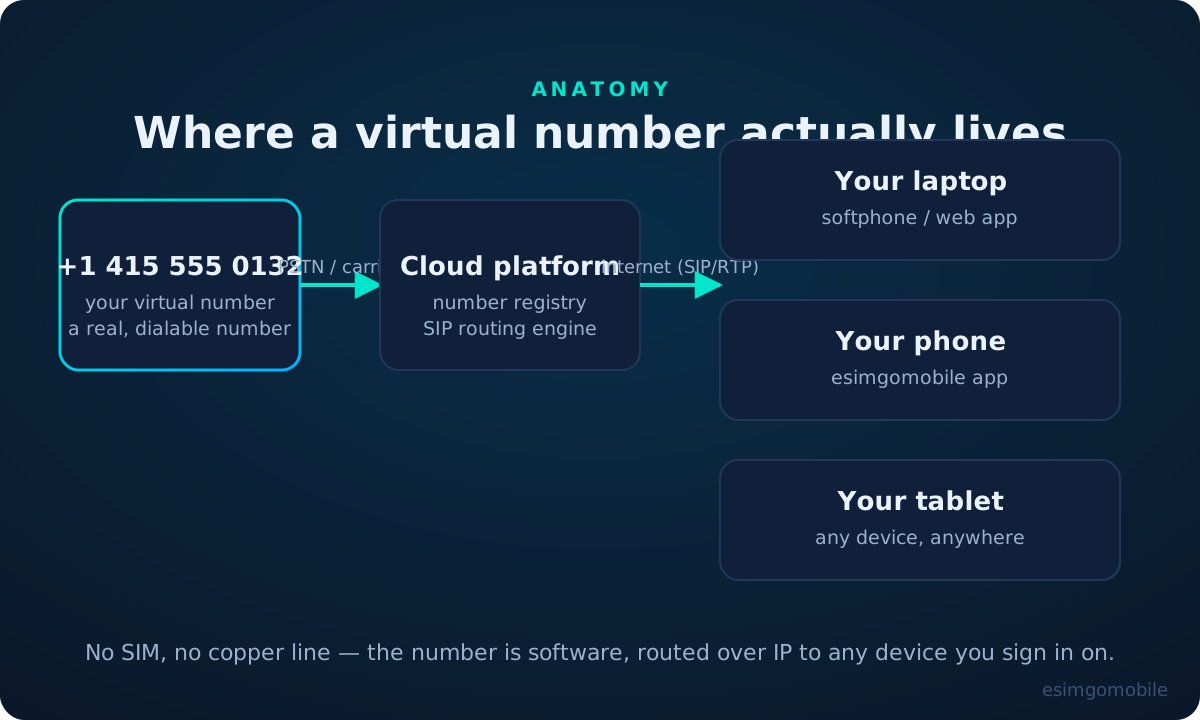
The one-sentence version: a virtual number separates your phone number (your identity) from your phone line (the hardware), so the identity can follow you anywhere with an internet connection.
The four types you’ll meet.
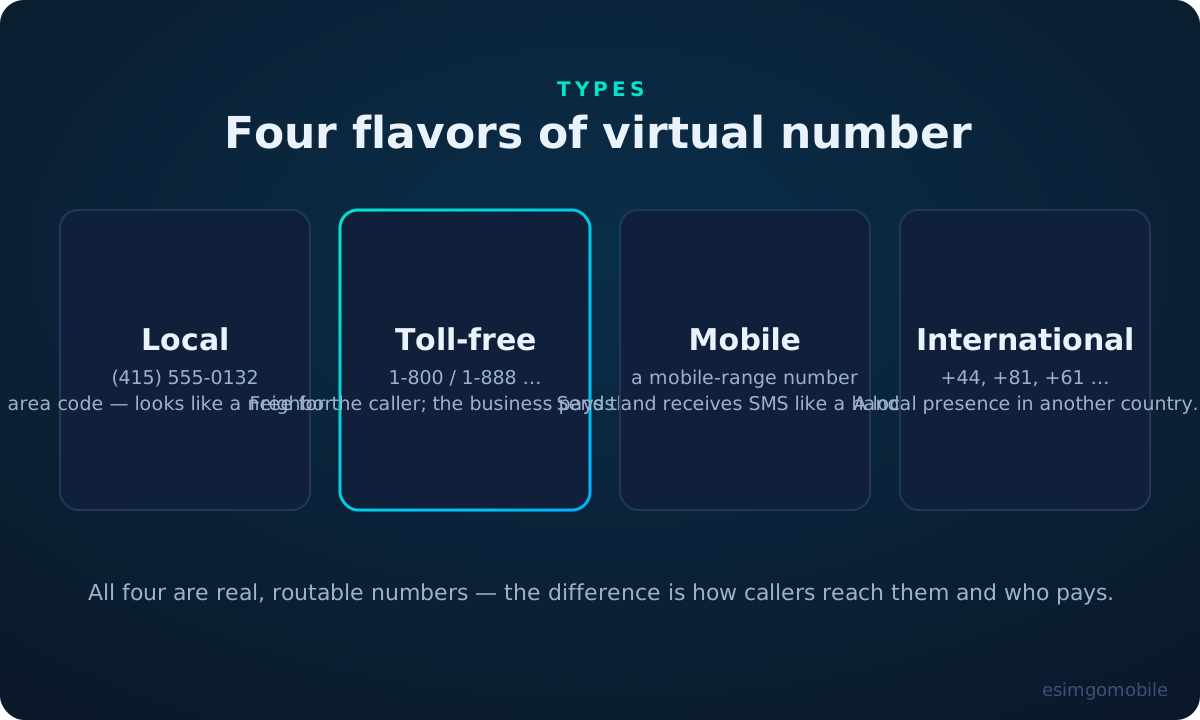
Not all virtual numbers are the same animal. They come in the same flavors as traditional numbers, because they are traditional numbers — just hosted differently:
Local (geographic) numbers
A normal area-code number, like a 415 number for San Francisco or a 020 number for London. Callers dial it like a neighbor. Businesses use local virtual numbers to look established in a city they’ve never set foot in — the number says “we’re here,” even when “here” is a laptop in another timezone.
Toll-free numbers
In North America these are the 800, 888, 877, 866, 855, 844 and 833 prefixes: free for the caller, with the business paying the toll. They signal “national company” and remove all hesitation about calling. Other countries have their own freephone ranges with the same idea.
Mobile numbers
Numbers from the mobile range behave like a handset number: they can send and receive SMS naturally, which matters because some services and many humans treat mobile numbers as more trustworthy for texting. A virtual mobile number texts exactly like a SIM number — because to the SMS network, it is one.
International numbers
A virtual number in another country’s numbering plan. A US business can hold a +44 London number that British customers dial at local rates, while the calls land on a phone in Austin. It’s the closest thing telephony has to teleportation.
Virtual number vs. VoIP vs. app IDs.
Three terms get tangled constantly. Untangle them once and the whole industry gets easier to read:
- Virtual number is the address — the phone number itself, hosted in software.
- VoIP (Voice over IP) is the transport — the technology that carries the voice as data packets. Virtual numbers almost always use VoIP under the hood, but VoIP can exist without a virtual number (office desk phones, for example).
- App IDs (your WhatsApp, Telegram or FaceTime identity) are not phone numbers at all in the network sense. Nobody can dial them from a regular phone. A virtual number bridges that gap: it’s reachable from the entire public phone network.
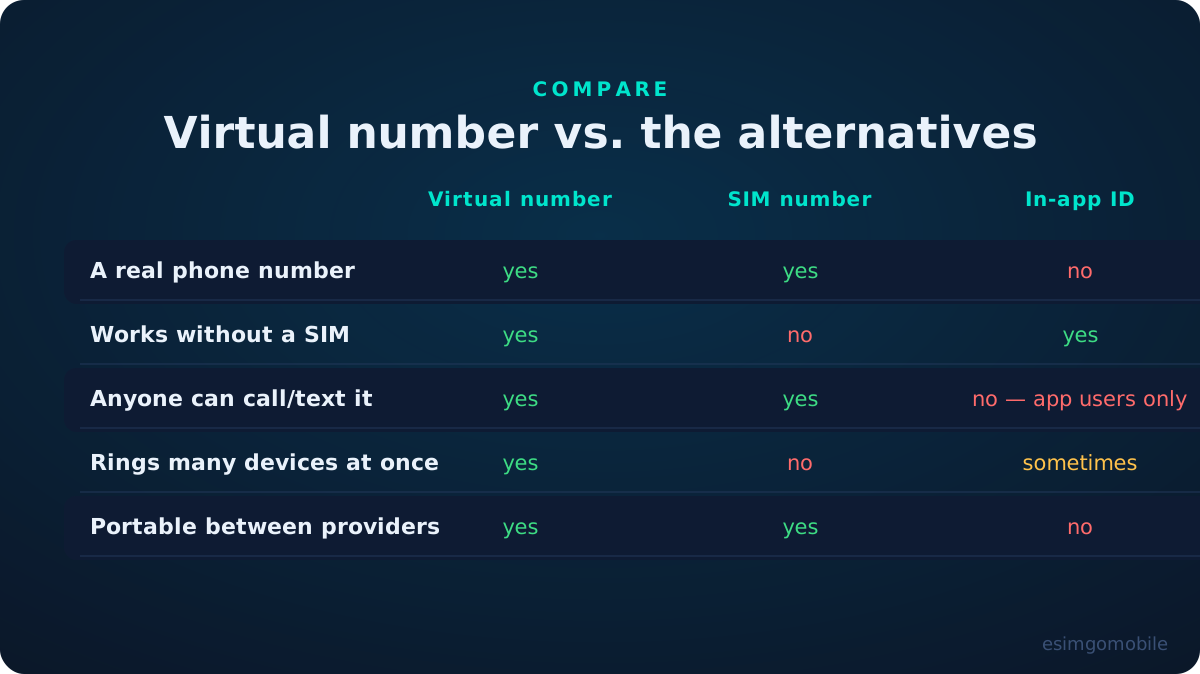
The practical test is simple: can a stranger with a 20-year-old Nokia call it? If yes, it’s a real phone number. Virtual numbers pass that test.
How a call reaches you.
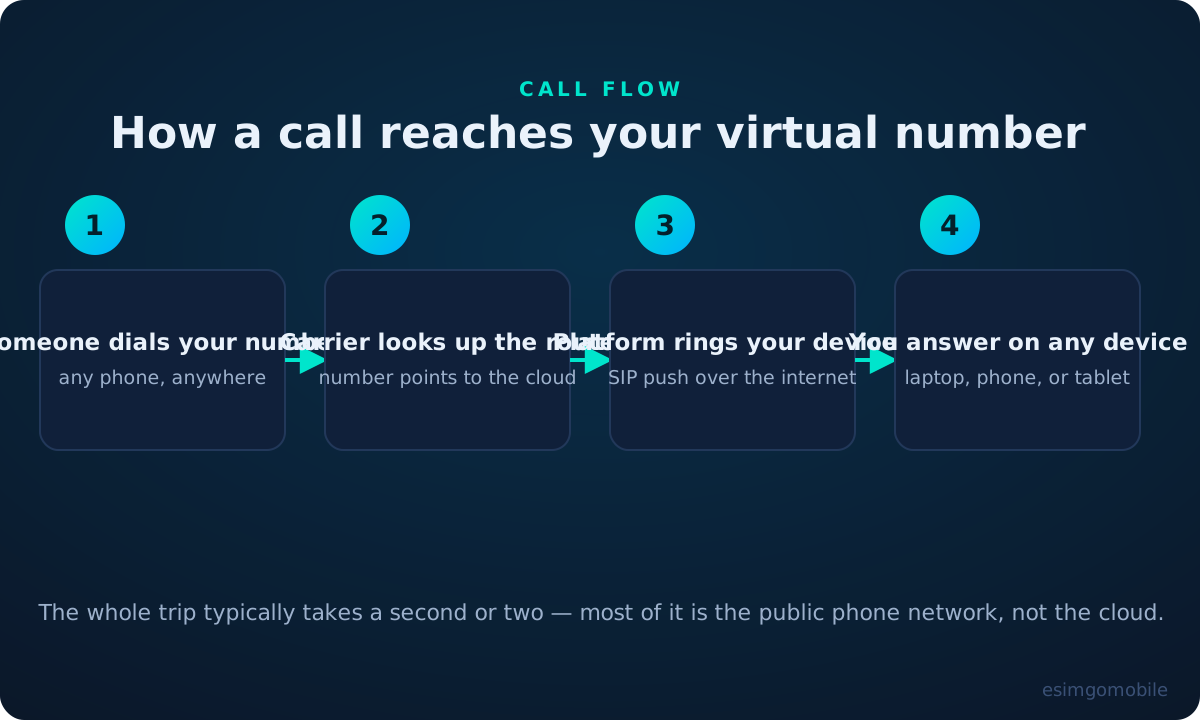
Follow a single call and the “virtual” part demystifies itself:
- Someone dials your number on any phone, anywhere. Their carrier sees a normal number and routes the call through the public phone network (the PSTN) like any other.
- The carrier looks up where the number lives. Number portability databases point your number at the cloud platform hosting it, so the call gets handed off from the old phone network to the internet.
- The platform rings your devices. Using SIP — the same signaling protocol behind most internet calling — it pushes an incoming-call notification to every device you’re signed in on.
- You answer wherever you are. Laptop, phone, tablet: the audio travels as RTP packets, the same way a video call does.
The whole trip usually takes a second or two, and most of that is the legacy phone network doing its thing — the cloud part is the fast part.
Who actually uses them.
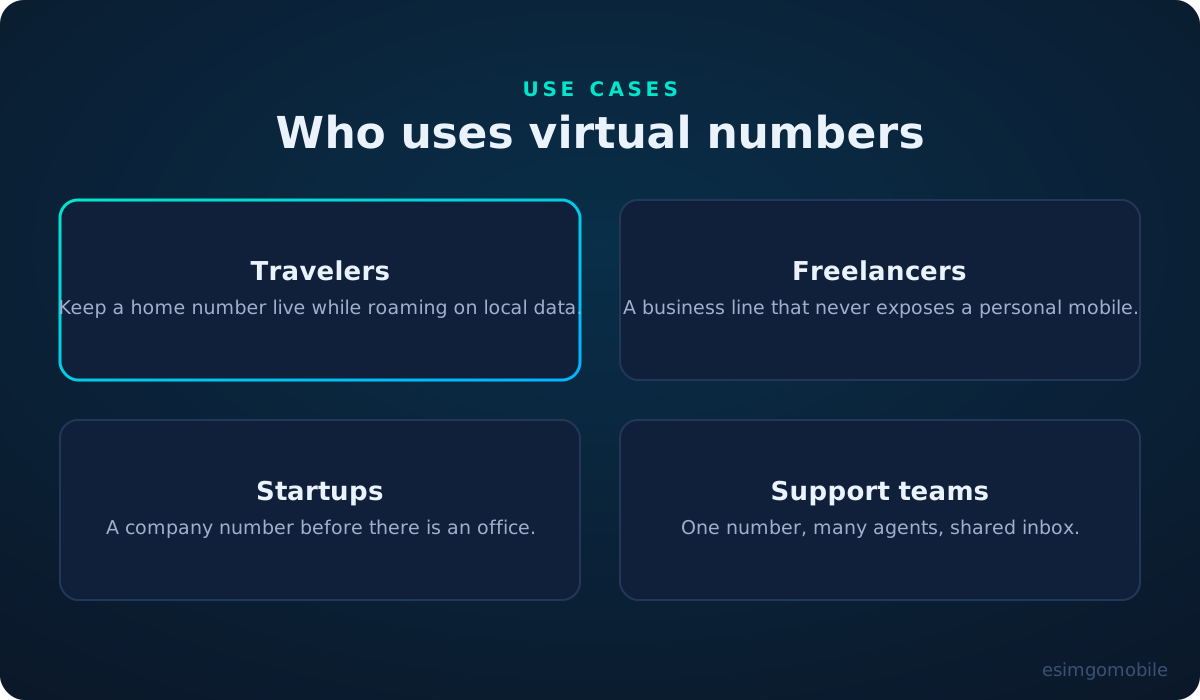
Virtual numbers stopped being exotic years ago. Today they’re infrastructure for:
- Travelers who keep a home number live while roaming on cheap local data — no more choosing between your number and your wallet.
- Freelancers and founders who need a business line that never exposes a personal mobile, with business hours that actually mean something.
- Startups that need a company number with an auto-attendant before there’s an office, a receptionist, or even a second employee.
- Support and sales teams sharing one number across many agents, with queues, routing and a shared message inbox.
- Developers and AI agents that need programmatic numbers — for verification flows, alerts, or an AI receptionist that answers calls.
Reading a phone number: E.164.
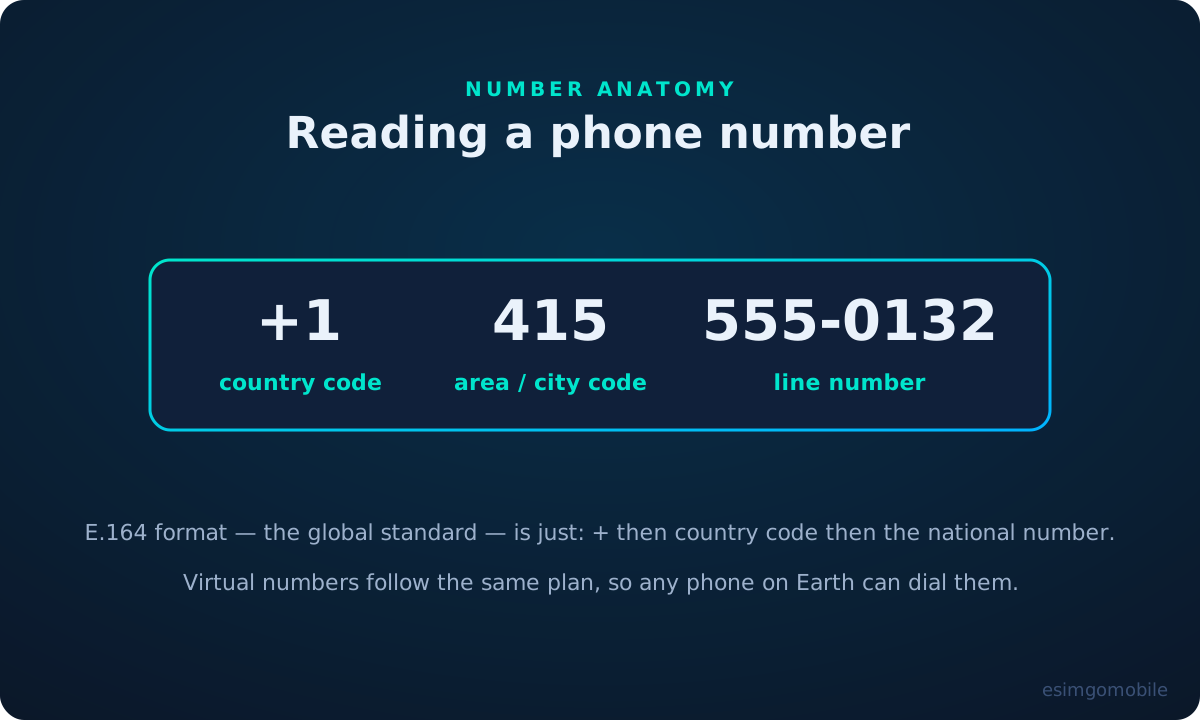
Every virtual number follows E.164, the international numbering plan: a +, then a country code (1 for North America, 44 for the UK, 81 for Japan), then the national number — at most 15 digits total. The country code routes between countries; the area or city code routes within one; the line number identifies the subscriber.
Why should you care? Because E.164 is what makes a virtual number universal. Store numbers in E.164 format in your contacts, your CRM and your code, and they’ll dial correctly from anywhere. It’s also the format every telephony API on Earth expects — including esimgomobile’s.
What virtual numbers can’t do.
A guide that only lists superpowers isn’t a guide. The honest limits:
- They need the internet. No connection, no calls — though good platforms fail over to voicemail or a backup number automatically.
- Emergency calling needs setup. A SIM phone’s location comes from the mobile network; a virtual number needs a registered address for 911/E112 routing. Reputable providers collect it at signup. (More in our E911 explained guide.)
- Some verification systems are picky. A few banks and services block VoIP ranges for SMS verification codes. A virtual mobile number usually passes; a toll-free one often won’t.
- Regulation follows the number. Real numbers mean real telecom rules: identity verification at signup, consent rules for messaging, and in the US, 10DLC registration for business texting. None of this is optional, and a serious provider handles most of it for you.
The bottom line: a virtual number is a real number with superpowers and a few responsibilities. Understand both, and it’s the most flexible phone identity you can own.
Questions, answered.
Is a virtual phone number a real phone number?
Do I need the internet to use a virtual number?
Can I text from a virtual number?
Can I keep my current number and make it virtual?
Will callers know my number is virtual?
Does a virtual number work internationally?
Where to go next.
Get your virtual number today.
Virtual numbers are live now — claim yours alongside any eSIM plan.